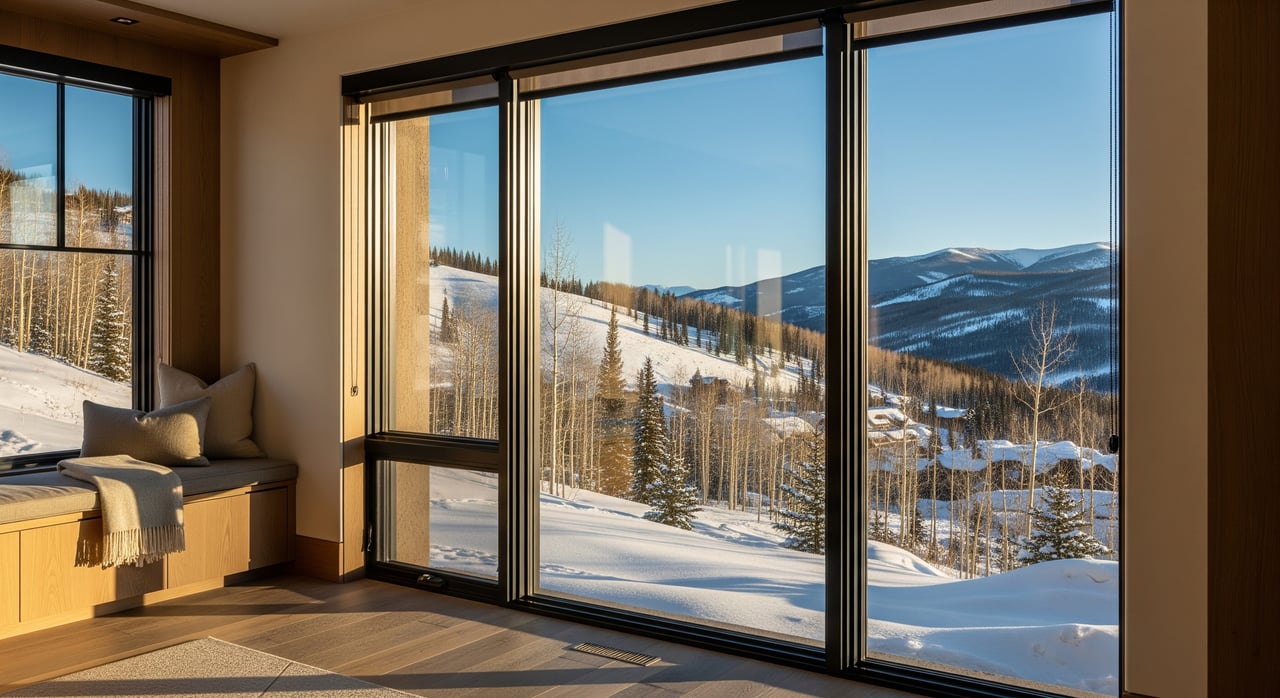
South sun and mountain snow can be a tough mix for any Mountain home. You want wide views and bright rooms, but you also need warm winters, cool summers, and windows that can handle heavy snow. The right glass and shading plan can give you all three. In this guide, you’ll learn how to choose triple pane windows, low‑E coatings, and smart shading for south elevations.
Why Mountain Homes need better windows
Mountain homes at high elevation with intense sun, cold winters, and big day‑to‑night temperature swings. Snow on the ground reflects extra sunlight back at your glass, especially on low winter sun angles. That means you can capture helpful winter heat, but you can also overheat on clear days without proper control. Heavy snowfall creates practical concerns. Window sills and egress openings can accumulate snow. Good detailing and placement matter as much as the glass you pick.
Key window ratings to know
Understanding a few NFRC ratings helps you compare products and set the right targets:
- U‑factor: How much heat the window loses. Lower is better for winter comfort and energy use.
- SHGC: How much solar heat passes through? Higher temperatures can help in winter, but increase the risk of summer overheating.
- VT: How much visible light gets in? Higher means brighter interiors and clearer views.
- Air Leakage (AL): Lower leakage cuts drafts and preserves performance.
In Wildridge, a low U‑factor is your top priority. On south facades, you can allow a moderate SHGC for winter sun if you pair it with exterior shading for summer. Keep VT high enough for views, and insist on low AL with tight installation.
Best specs for south windows
Here are solid starting targets for cold, high‑altitude homes with south exposure:
- Whole‑unit U‑factor: 0.15 to 0.22 with triple pane. Premium units can reach 0.15-0.18. Cost‑effective options often fall in the 0.20 to 0.22 range.
- SHGC (south‑facing):
- Passive solar priority: 0.45 to 0.55 with fixed or seasonal shading.
- Comfort and balance: 0.35 to 0.45 with exterior shading or operable screens.
- Overheating concern: 0.25 to 0.35, especially with large glass areas.
- VT: 0.45 to 0.60 for views and daylight while managing glare.
- Air Leakage: Choose low AL units with verified NFRC test results and ensure airtight installation.
Triple pane and gas fills
Triple-pane glazing improves U‑factor and comfort at the glass. Argon is the standard, cost‑effective fill. Krypton performs better in narrow cavities and appears in some premium triples, but it costs more. For large south windows, argon is usually the best value. For smaller, performance‑driven units, krypton can be worth it.
Low‑E strategy that fits your goals
Low‑E coatings reduce heat loss and manage solar gain. For winter performance, one low‑E coating on the interior side of the outer pane is common. Adding a second low‑E coating lowers U‑factor further but also reduces SHGC. If passive solar is a goal on the south side, choose a spectrally selective low‑E that keeps a moderate SHGC and higher VT, or use a single low‑E to preserve more winter sun.
Frames and spacers that prevent condensation
Thermally improved frames and warm‑edge spacers help keep interior glass edges warmer, reduce condensation risk, and boost overall comfort. Look at insulated wood, fiberglass, thermally broken aluminum, or high‑quality vinyl frames. The frame and installation details often matter more than tiny differences in center‑of‑glass U‑factor.
Control the sun and manage the snow
Shading that works at altitude
External shading is the most effective way to stop unwanted summer heat before it enters the home:
- Fixed overhangs sized to block high summer sun while admitting low winter sun.
- Operable exterior shades, such as roller screens or louvres, for flexible control during peak summer.
- Interior shades help reduce glare and improve comfort, but do less to reduce heat gain.
Glare and view balance
High‑VT, spectrally selective glass maintains daylight and views while moderating heat. If glare is a concern in a specific area, consider a fritted section or selective use of lower‑VT glass without sacrificing the bigger view panes.
Sill, flashing, and drainage
Snow management starts with detailing:
- Use sloped sills rather than recessed sills, which can trap snow and ice.
- Keep egress windows and mechanical intakes above expected snow levels or shielded from drifts.
- Include continuous, sloped sill pans and clear drainage paths to keep meltwater out of the wall.
Comfort, lifespan, and maintenance
Well‑specified triple-pane windows reduce drafts and cold‑glass discomfort, leading to steadier indoor temperatures. You can expect 20 to 30 plus years of service life from quality frames and glass. Gas fills slowly and diffuses over time, so choose reputable manufacturers with strong seals and multi‑part warranties.
Plan for simple care in a mountain climate:
- Inspect caulking and flashing yearly before snow season.
- Clear snow from sills and drainage paths after big storms.
- Service exterior shading hardware and motors as needed.
- Use balanced ventilation, such as HRV or ERV, to control indoor humidity and further reduce condensation risk during cold snaps
- Prescriptive: Choose NFRC‑rated windows that meet or beat the table values for your climate zone.
- Performance: Use energy modeling to trade off assemblies if you want more glazing or unique design elements.
For a smooth plan review, prepare:
- NFRC labels or cut sheets showing U‑factor, SHGC, VT, and AL for each unit.
- Installation details for flashing, sill pans, air sealing, and insulation at heads and jambs.
- Shading notes or drawings for south glazing, especially fixed overhang dimensions.
- Compliance software output if you use the performance path.
A practical target is to specify NFRC‑rated triple-pane units that meet the prescriptive U‑factor and to select a south‑side SHGC within your chosen strategy range. Always confirm any local amendments with Avon permitting.
Cost, rebates, and sourcing tips
Triple-pane windows cost more upfront than double-pane windows, but they can deliver better comfort and lower heating demand in Wildridge. Payback depends on energy prices, your heating system, and the amount of glass you have.
Before you buy, check for incentives. Local utilities and state programs often offer rebates for high‑performance windows. Look to providers serving Eagle County for current offers and qualifying product lists.
When you request quotes:
- Require whole‑unit NFRC ratings, not just center‑of‑glass numbers.
- Ask for lab data on condensation resistance if frost has been an issue in the past.
- For large south glass walls, consider a mockup or a single sample unit to verify sightlines, shading results, and integration details.
A simple project roadmap
- Confirm your IECC climate zone and any local amendments with Avon permitting.
- Set performance targets: triple-pane U‑factor 0.15 to 0.22, SHGC for south windows based on your comfort strategy, and VT 0.45 to 0.60.
- Choose a low‑E plan: single or spectrally selective for passive solar, or double low‑E to minimize heat loss.
- Specify frames and spacers: thermally improved frames and warm‑edge spacers.
- Design shading: fixed overhangs sized for your windows plus operable exterior shading for peak summer.
- Details for snow: sloped sills, raised egress, sill pans, and clear drainage.
- Prepare documentation: NFRC ratings, installation details, and modeling if using the performance path.
- Check rebates with local utilities before ordering.
If you are planning a build or upgrade your mountain home, you can pair mountain views with four‑season comfort. We can connect you with trusted local window specialists, energy modelers, and installers, and coordinate the details around your schedule. T
What window specs work best for south-facing Wildridge homes?
- Aim for triple pane with a whole‑unit U‑factor of 0.15 to 0.22, SHGC between 0.35 and 0.55 depending on your comfort goals, and VT around 0.45 to 0.60.
How do I prevent summer overheating with large south windows?
- Combine moderate SHGC glass with fixed overhangs sized to block high summer sun and add operable exterior shades for peak months.
Should I choose single-low-E or double-low-E for south-facing glass?
- Single low‑E preserves more SHGC for passive winter gains, while double low‑E lowers U‑factor but also reduces SHGC, which suits designs focused on minimizing heat loss.
- Triple-pane windows are strongly recommended for new builds or major replacements in high‑altitude cold climates, offering better U‑factor and comfort, with payback depending on energy prices and glazing area.